


Learning how to evaluate the reliability of online sources

The image shows a professional portrait of a woman with long, dark brown hair and glasses, smiling warmly. She is wearing a floral-patterned blouse under a black jacket, and the setting is softly lit, with an out-of-focus background featuring natural light and hints of greenery. The photograph conveys a friendly and approachable demeanour, suitable for professional or academic contexts.

Dr Lynette Pretorius

Dr Lynette Pretorius is an award-winning educator and researcher specialising in doctoral education, AI literacy, research literacy, academic identity, and student wellbeing.


It is commonly thought that contemporary students are digital natives who are naturally able to use sophisticated digital literacy in their daily practices because they have been immersed in the digital age their entire lives. Research, though, shows that the concept of being a digital native is a myth. For example, studies have shown that students born in the digital age use technology frequently, but that this often requires only basic technology knowledge (e.g., how to type a search into an internet browser or how to send and receive emails or instant messages).

It is clear from the research that students require significant support to learn how to use specific technologies for learning. Students entering university are not necessarily familiar with the skills needed to access information at a university level. For example, many have never had to search for or read academic journal articles before. It is, therefore, incumbent upon us to teach students how to find this type of information on the internet, while also assessing the reliability of the information they obtain.

There is clear evidence that, while students are able to use technology to find information (i.e., search engines), little attention is given to evaluating the quality of information. As educators, we need to help students learn how to effectively evaluate information for relevance, accuracy, or authority so that they can enter the online information landscape and resolve conflicts between online media and scholarly content.

I explicitly teach students how to evaluate the reliability of sources during my orientation workshops each semester. This is done in a two-hour workshop focused on how to read academic sources effectively. A key component of this workshop is an online interactive tutorial which I developed several years ago. I have recently made the tutorial freely available for other educators to use in their classrooms.

The tutorial incorporates case-based learning and self-discovery to encourage learning through experience. After completing each case, the students are provided with an expert evaluation of the reliability of the source. There are five cases, as outlined below:

  • Blog Post
    • Students are presented with a blog post discussing the science of salt lamps and how it can be used to treat asthma. Students are asked to decide whether the source is reliable or unreliable for use in their assignment. Students are also asked to provide a reason for their evaluation. After submitting their answers for each question, students are provided with a video explaining how to evaluate the reliability of sources.
  • Wikipedia
    • Students are presented with a Wikipedia entry for the Opium War. Students are asked whether they think Wikipedia is an appropriate first step in research. They are given three options from which to choose:
      • Yes, you should research a topic on Wikipedia first, as it gives you a broad understanding of the ideas important to the topic.
      • Sometimes, as you can gain some useful information and Wikipedia can provide links to other resources such as journal articles, books, and academic websites.
      • No, as Wikipedia can be edited by anyone, the reliability of the information is suspect.
  • History Website
    • Students are presented with a history website discussing the Opium War. Students are asked to select items they think make the source reliable from the following list: the author is a historian, the author has written several articles on the website, the article uses historical dates and Chinese names, the author lived and worked in Asia, and the article is easy to understand. Students are also asked to select items they think make the source unreliable from the following list: there are no references, the article does not indicate to which institution the author is affiliated, the website sounds unreliable, and the links to further information redirects to other pages on the same website. Students are then asked to provide an overall evaluation of the sourceโ€™s reliability.
  • Newspaper Article
    • Students are presented with a newspaper article discussing a new medical treatment for heart disease. Students are asked whether this source can be used in an assignment by choosing from one of the following options:
      • Yes. This article clearly describes a new pharmaceutical treatment for heart disease, quotes a respected professor in the field, and highlights the key research findings.
      • Sometimes. These types of articles can be useful as they provide information in an easy to understand language, and can provide the links to the original research.
      • No. You should never use these types of articles in an academic assignment
  • Journal Article
    • Students are presented with a journal article presenting qualitative data from an educational research paper about self-discovery learning at university. Students are asked to select items they think make the source reliable from the following list: the article is published in an international education journal, the authors work at an academic institution and have qualifications in the field, the article describes original research, the authors use data to support their claims, and the article uses technical terms. Students are also asked to provide an overall evaluation of the sourceโ€™s reliability and to provide a reason for their evaluation.

In my research paper, I evaluated my teaching strategy and found that this approach can effectively teach students how to discern the reliability of sources. It helps students deepen their personal understanding of what makes sources reliable or not. By analysing the responses students provided to the blog post, I discovered that students had not previously considered that evaluating the reliability of a source would be an important consideration for writing assignments. I also found that students’ evaluations of sources were dependent on their personal opinions about the topic, rather than any verifiable evidence provided in the source. Then, as they moved through the tutorial, students started to discover which aspects were most important in establishing the credibility and reliability of research. By the time they reached the final source, they were much more cautious when assessing the research, often asking for further details about the source.

Through my research, I was able to demonstrate that the students in my study had changed their way of looking at online information. They had crossed a threshold in understanding which permanently transformed their way of thinking. This demonstrates the value of explicit instruction through self-discovery learning as a pedagogical tool for teachers.

Questions to ponder

How do you personally evaluate the credibility of information you find online? What specific criteria or strategies do you use, and how do these align with or differ from the methods outlined in the tutorial described in the study?

How has the skill of evaluating digital sources impacted your academic work or research? Can you recall a situation where discerning the reliability of a source significantly influenced the outcome of your project or research? How did this experience shape your approach to digital literacy?

Building a sense of belonging for students who do not live on campus

The image shows a professional portrait of a woman with long, dark brown hair and glasses, smiling warmly. She is wearing a floral-patterned blouse under a black jacket, and the setting is softly lit, with an out-of-focus background featuring natural light and hints of greenery. The photograph conveys a friendly and approachable demeanour, suitable for professional or academic contexts.

Dr Lynette Pretorius

Dr Lynette Pretorius is an award-winning educator and researcher specialising in doctoral education, AI literacy, research literacy, academic identity, and student wellbeing.


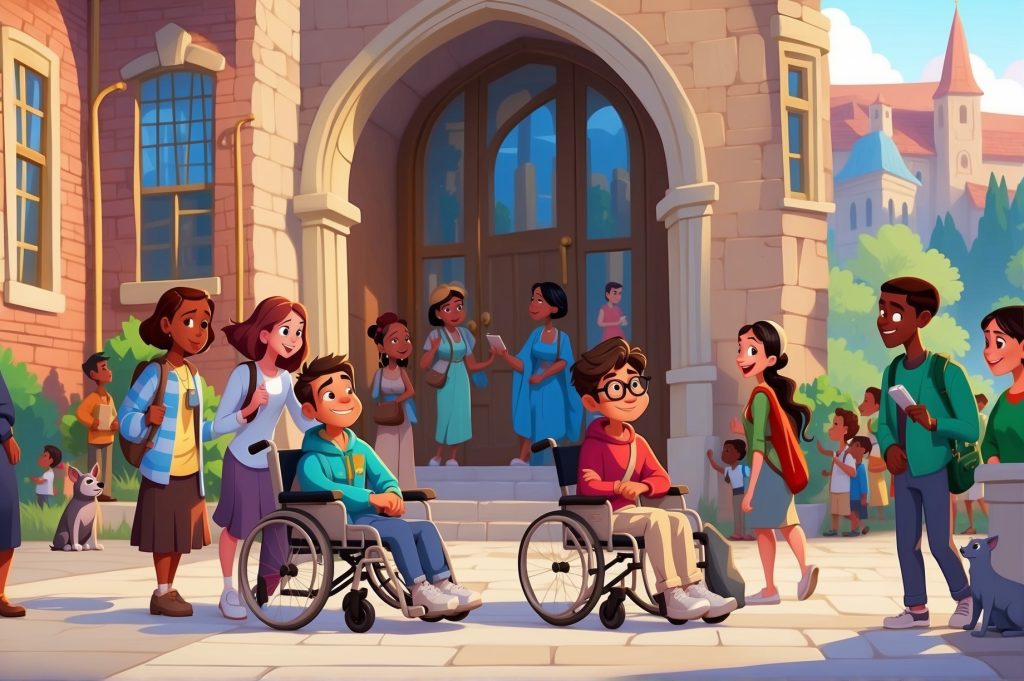
Students who do not live on campus and commute to university (often termed commuter students) can experience a sense of detachment from the university community, which can adversely affect their student experience. Juggling travel, studies, and other commitments means that these students can feel like they are visitors to their own campus. In a recent paper, my colleagues and I describe and evaluate the non-residential colleges (NRC) program at Monash University, an initiative designed to specifically foster a greater sense of connection for commuter students.

The NRC program creates a space where commuter students can experience similar support programs and campus activities as those who live in the residences on campus. Students are assigned a college mentor (a student who has already studied at the university for a while). These mentors are each responsible for providing mentoring and pastoral support for a small group of students. They also organise social events for their mentees and larger events for the whole college. Each college also has a college head and deputy head, who are members of staff with an interest in student engagement and belonging. There are also administrative staff who oversee the program to ensure an equitable experience for all students. In this way, NRC provides extra-curricular support for commuter students, aiming to emulate the community feel of traditional residential colleges, thereby building students’ sense of belonging.

It is important to note that “sense of belonging” is not just a feel-good term. Research consistently demonstrates that a sense of belonging plays a critical role in the academic and personal development of students. Some of the benefits of feeling connected to your place of study include:

  1. Academic success: Numerous studies have shown a strong connection between a sense of belonging and academic achievement. When students feel like they are a part of their university community, they are more likely to be motivated, engaged, and committed to their studies.
  2. Mental health and wellbeing: The transition to university life can be challenging, often marked by a sense of isolation and disconnection. Feeling connected to the university community can provide emotional support, reduce stress and anxiety, and improve mental health.
  3. Retention rates: When students feel valued and connected, they are less likely to drop out and more likely to complete their degrees.
  4. Personal development: University is a time for personal growth and development. A sense of belonging can facilitate this by providing a safe environment where students can explore their identities, build confidence, and develop interpersonal skills.

We wanted to evaluate the effectiveness of the NRC program, so we surveyed students who were part of the NRC program and students who were not, focusing on their sense of belonging, campus engagement, and overall student experience. We found that NRC students had a more positive university experience compared to non-NRC students. There were four key insights from the study:

  1. The NRC program was effective in enhancing students’ sense of belonging to the university community. This was achieved through increased interaction with peers and staff, along with more frequent campus attendance.
  2. Participants in the NRC program reported a more positive university experience compared to non-NRC students. This was reflected in their choice of words describing their experience, with a higher selection of positive terms like “friendly”, “community”, “comfortable”, and “supportive”.
  3. The study showed that NRC students were more likely to remain on campus after classes and interact more with their peers and teaching staff, indicating an increased engagement in both social and academic aspects of university life.
  4. Interestingly, NRC students were also more likely to have contemplated ways to enhance their employability, suggesting a broader impact of the program beyond just academic and social engagement. This was despite the NRC program not focusing on employability. We think this benefit comes from discussions students have with their mentors, who may be considering employability as they are further along in their course of study.

As universities continue to evolve and adapt to the diverse needs of their student populations, initiatives like the NRC program can play a pivotal role in shaping a more inclusive and supportive educational environment. A strong sense of belonging is linked to the creation of an inclusive environment that respects and values diversity. It is important to ensure that all students, regardless of their background, feel welcomed and accepted. This is particularly important in university settings, where students from various identities, cultures, and backgrounds come together. The NRC programs’ success in fostering community, engagement, and a sense of belonging is a compelling argument for the adoption of similar initiatives in tertiary institutions worldwide.

Importantly, this study underscores the importance of acknowledging that the goal of a university education is not just academic achievement. As educators, we should encourage the holistic development of our students by encouraging students to engage with initiatives such as the NRC program. In this way, we can encourage them to seek out and engage with opportunities to have a more fulfilling university experience.

Questions to ponder

  1. In your opinion, how important is building a sense of community within a university? Can online platforms and social media complement initiatives like the NRC program?
  2. What role can technology play in enhancing the sense of belonging and community for commuter students?

Fostering AI literacy as students, teachers, and researchers

The image shows a professional portrait of a woman with long, dark brown hair and glasses, smiling warmly. She is wearing a floral-patterned blouse under a black jacket, and the setting is softly lit, with an out-of-focus background featuring natural light and hints of greenery. The photograph conveys a friendly and approachable demeanour, suitable for professional or academic contexts.

Dr Lynette Pretorius

Dr Lynette Pretorius is an award-winning educator and researcher specialising in doctoral education, AI literacy, research literacy, academic identity, and student wellbeing.


Credit: This blog post is an adapted form of a recent paper I wrote.

Artificial intelligence (AI) has been present in society for several years – think, for example, of computer grammar-checking software, autocorrect on your phone, or GPS apps. Recently, however, there has been a significant advancement in AI research with the development of generative AI technologies like ChatGPT. Generative AI refers to technologies which can perform tasks that require creativity by using computer-based networks to create new content based on what they have previously learnt.

For example, generative AI technologies now exist which can write poetry or paint a picture. Indeed, I entered the title of one of my published books (Research and Teaching in a Pandemic World) into a generative AI which paints pictures (Dream by WOMBO). The response it generated accurately represented the bookโ€™s content, was eye-catching, and I believe it would have been a very suitable picture for its cover. Check it out:

(Note: This response was generated by Dream by WOMBO (WOMBO Studios, Inc., https://dream.ai/) on December 12, 2021 by entering the prompt โ€œresearch and teaching in a pandemic worldโ€ into the generator and selecting a preferred style of artwork.)

The introduction of generative AI has, however, led to a certain amount of panic among educators; many workshops, discussions, policy debates, and curriculum redesign sessions have been run, particularly in the higher education context. Educators acknowledge that there is a need to accept that generative AI can also be leveraged to support student learning. In fact, it is clear that students will likely be expected to know how to use this technology when they enter the workforce. Importantly, though, there has also been significant concern that generative AI would encourage students to cheat. For example, many educators fear that students could enter their essay topic into a generative AI and that it would generate an original piece of work for them which would meet the task requirements to pass.

I believe what is missing from these discussions regarding generative AI is the fact that assessment regimes focus predominantly on the product of learning. This focus assumes that the final assignment is indicative of all the studentโ€™s learning but neglects the importance of the learning process. This is where generative AI can be a valuable tool. From this perspective, the technology should be considered as an aide, with the intellectual work of the user lying in the choice of an appropriate prompt, the assessment of the suitability of the output, and subsequent modification of that prompt if the output does not seem suitable. Some examples of the use of generative AIs as an aide include helping students develop an outline or brainstorm ideas for an assignment, providing feedback to students on their work, guiding students in learning how to improve the communication of their ideas, and acting as an after-hours tutor or a way for English-language learners to improve their written skills. Using generative AI in this more educative manner can help students better engage with the process of their learning.

In a similar way to when Microsoft Word first introduced a spell-checker, I believe generative AI will become part of our everyday interactions in a more digitally connected and inclusive world. Importantly, though, as mentioned above, while generative AI may help the user create something, it is dependent on the user providing it with appropriate prompts to be effective. The user is also responsible for evaluating the accuracy or usefulness of what is generated. As such, we need to teach students how to communicate effectively and collaboratively with generative AI technologies, as well as evaluate the trustworthiness of the results obtained โ€“ a concept termed AI literacy. I believe AI literacy is likely to soon become a key graduate attribute for all students as we move into a more digital world which integrates human and non-human actions to perform complex tasks.

It appears that my university has come to the same conclusion. Monash University’s generative AI policy notes that students and researchers at Monash University are allowed to use generative AI, provided that appropriate acknowledgement is made in the text to indicate what role the generative AI played in creating the final product. The University has also created a whole range of resources which are freely accessible to students and the wider public to help them learn how to use generative AI ethically. I have recently developed a video (Using generative artificial intelligence in your assignments and research) that explains what generative AI is and what it can be used for in assignments and research.

In my teaching practice, I now advise students to use generative AI as a tool to help them improve their approaches to their assignments. I suggest, in particular, that generative AI can be used as a tool to start brainstorming and planning for their assignment or research project. I include examples of how generative AI can be used for various purposes in my classes. For example, I highlight that generative AI may be able to assist a researcher in generating some starting research questions, but it is the researcherโ€™s responsibility to refine these questions to reflect their particular research focus, theoretical lens, and so on. I emphasise to students that generative AI will not do all the work for them; they need to understand that they are still responsible for deciding what to do with the information, linking the ideas together, and showing deeper creativity and problem-solving in the final version of their work.

I have recently showcased this approach in a video which is freely available on YouTube. The first video (Using generative artificial intelligence in your assignments and research) explains what generative AI is and what it can be used for in assignments and research. The second video (Using generative AI to develop your research questions) showcases a worked example of how I collaborated with a generative AI to formulate research questions for a PhD project. These videos can be reused by other educators as needed.

This video starts by showing students how I have used ChatGPT to brainstorm a starting point for a research project by asking it to โ€œAct as a researcherโ€ and list the key concerns of doctoral training programmes. In this way, I show the students the importance of prompt design in the way they collaborate with the generative AI. In the video, I show that ChatGPT provided me with a list of seven core concerns and note that, using my expertise in the field, I have evaluated these concerns and can confirm that they are representative of the thinking in the discipline. In the rest of the video, I showcase how I can continue my conversation with the generative AI by asking it to formulate a research question that investigates the identified core concerns. I show students how I collaborated with the generative AI to refine the research question until, in the end, a good quality question is developed which incorporates the specificity and theoretical positioning necessary for a PhD-level research question.

It is important to note that students are likely not yet experts in their field when they are designing their research questions. Therefore, it is important to provide them with guidance as to how to evaluate the ideas produced by generative AI. This includes highlighting that a generative AI is not always accurate, that it may disregard some information which may be pertinent to a specific research project, or that it may fabricate information. Students need to learn that a generative AI is not a tool similar to an encyclopedia which contains all the correct information. Rather, generative AI is a tool which responds to prompts by generating answers it โ€œthinksโ€ would be appropriate in that particular context. Consequently, I advise students to use generative AI as a starting point, but that they should then explore the literature to further assess the accuracy of the core concerns identified earlier as well as the viability of the research question for their project.

It is also worth noting that generative AI could be used as a way to help students see what a good research question might look like, rather than using it specifically to develop a research question for their particular research project. Generative AI may also be useful in helping students see how to organise the themes in the literature. In this way, we encourage students to use generative AI as part of the learning process, allowing them to scaffold their skills so that they can use their creativity and other higher-order thinking skills to further advance knowledge in their discipline.

Students should also be taught how to appropriately acknowledge the use of generative AI in their work. Monash University has provided template statements for students to use. I use these template statements as part of my regular workshops. In this way, I show students that ethical practice is to acknowledge which parts of the work the generative AI did and which parts of the work were done by a person.

I have also recently used such an acknowledgement in one of my research papers. I have included it below for other researchers to use in their work.

I acknowledge that I used ChatGPT (OpenAI, https://chat.openai.com/) to generate an initial draft outline of the introduction of this manuscript. The prompt provided for this outline was “Act as a social science researcher and write an outline for a paper advocating for change to survey design to collect more diverse participant information”. I adapted the outline it produced for the introduction to reflect my own argument, style, and voice. This section was also significantly adapted through the peer review process. As such, the final version of the manuscript does not include any unmodified content generated by ChatGPT.

As with all new technologies, there are potential challenges and risks that should be considered. Firstly, generative AI technologies can generate results which seem correct but are factually inaccurate or entirely made up. Secondly, there is the issue of equity of access. It is incumbent upon us as educators to ensure that all students have equal access to the technologies they may be required to use in the classroom. Thirdly, there is the risk that the generative AI may learn and reproduce biases present in society. Finally, for researchers, there are also ethical concerns relating to the retention and possible generation of potentially sensitive data.

Generative AI is, at its core, a natural evolution of the technology we already use in our daily practices. In an ever-increasingly digital world, generative AI will become integral to how we function as a society. It is, therefore, incumbent upon us as educators to teach our students how to use the technology effectively, develop AI literacy, and use their higher-order thinking and creativity to further refine the responses they obtain. I believe that this form of explicit modelling is how we, as educators, can help students develop an understanding of generative AI as a tool to improve their work. In this way, we focus on the process of learning, rather than being so focused on the ultimate product for assessment.

Questions to ponder

How do you think AI literacy can be integrated into current educational curricula to enhance learning while ensuring academic integrity? What are the potential challenges and benefits of incorporating generative AI into classroom settings?

How should students and researchers navigate the ethical implications of using AI-generated content in their assignments and research?

Improving studentsโ€™ understanding by building a culture of academic integrity

The image shows a professional portrait of a woman with long, dark brown hair and glasses, smiling warmly. She is wearing a floral-patterned blouse under a black jacket, and the setting is softly lit, with an out-of-focus background featuring natural light and hints of greenery. The photograph conveys a friendly and approachable demeanour, suitable for professional or academic contexts.

Dr Lynette Pretorius

Dr Lynette Pretorius is an award-winning educator and researcher specialising in doctoral education, AI literacy, research literacy, academic identity, and student wellbeing.


Credit: This blog post is an adapted form of a case study I wrote for Advance HE.

Universities have been cracking down on cheating and all sorts of dishonest academic behaviour recently. They’ve rolled out a bunch of strict rules related to academic integrity and use fancy software to keep an eye out for academic misconduct. In this space, there’s this idea floating around that you should either focus your attention entirely on fighting cheating or you should only be championing academic honesty (Dawson, 2021). However, I believe that this is a false dichotomy. It’s not just about telling students what not to do, even though this is of course important; it’s also about getting them involved in the process, making them understand and own up to their responsibilities. It’s teaching them the ropes of being academically honest through real experiences. In this way, we create a culture of academic integrity (Cutri et al., 2021). This means encouraging students to think about their own academic integrity practices, talking about academic integrity openly, and using mistakes as teachable moments, especially when it comes to plagiarism.

Encouraging students to think about their own academic integrity practices

I’m a big believer in the power of self-reflection because I know that reflecting on your own experiences and beliefs can really open your eyes, spark growth, and sharpen your skills (Cahusac de Caux et al., 2017). That’s why I always make sure my students get the chance to think about their own academic integrity practices. For example, I recently completed a project with some PhD students where we dived into the research on academic integrity and they got to reflect on why they approached academic integrity in certain ways. It was eye-opening for them to see how their academic identities shaped their approaches to academic integrity. One student, for example, mentioned how coming from a country where textbooks were almost worshipped, they found it difficult to critically analyse other studies. They weren’t used to pointing out flaws or gaps in research, which led them to rely a lot on direct quotes. This project showed us that sometimes it’s a lack of confidence that drives how students write. We ended up developing a model of academic integrity at the doctoral level, which highlighted how feeling like an impostor can lead to plagiarism and other dishonest academic practices. We published our findings in an open-access paper in 2021 and you can access it by clicking on the button below.

Talking about academic integrity openly

Over the last decade, I’ve been developing different ways to help students get better at playing by the academic rules, including workshops, online videos, and something I call the Practice Turnitin Assignment. Every semester, I run a workshop named โ€œReferencing and Academic Integrityโ€. It’s open to all the students in my faculty, and it’s all about understanding what counts as plagiarism, how to make sure work is original, and what is considered the right way to reference sources in our faculty. All the notes for this workshop are provided beforehand and are also publicly available through our Doing Assignments Booklet. If you would like to use these notes, you can download them by clicking on the button below.

I’ve been teaming up with my colleagues to improve how we describe assignments, design our marking guides, and give feedback. We’ve been making a real point of showing how crucial it is to back up arguments with solid evidence. It’s all about emphasising the importance of being honest in your work. This includes explicit marking rubric criteria linked to the use of references to support work as well as clear criteria associated with formatting the references correctly. This is because these two things are separate academic skills – one focuses on being able to support your arguments while the other emphasises being able to follow a template.

I also decided to develop a bunch of snappy videos in YouTube. I’ve played around with different styles for these videos, and students can pick and choose what they watch and in what order. It’s great for giving students the info they need, right when they need it. You can learn more about how I designed these videos here. Turns out, my YouTube channel’s a bit of a hit – it’s racked up over a million views last time I checked! Over 8,000 people have also subscribed so that they can be notified when I create new videos. The best bit? I’ve made all my videos freely available, so any educator out there can use them in their classes. Check out my channel by clicking on the button below.

Finally, I developed a resource called the โ€œPractice Turnitin Assignmentโ€ which is available to all students in my faculty. My university uses Turnitin to spot any copied work, but I figured why not use it as a teaching tool as well? I set up a special Turnitin assignment where students can submit their work, but no staff checks it and it doesn’t get stored in Turnitin’s database. This means students can use the Practice Turnitin Assignment to test their summarising and paraphrasing skills, see where they might be going wrong, and fix their work before they submit it. In this way, I am encouraging students to check the academic integrity of their work as part of their assignment writing process.

Using mistakes as teachable moments

Let’s be real, though. Even with all my hard work, my colleagues and I will still spot cases of plagiarism every semester. Most of the time, it’s not because students are trying to purposely cheat. More often than not they just don’t understand how to apply the rules (e.g., they just don’t know how to reference properly). Sure, this does necessitate penalties, like failing the assignment, but I also see this as a chance for a teachable moment.

That’s why I’ve set up a process where, when a student slips up and it’s clear they didn’t mean to, their lecturer can send them my way. I sit down with them and we go over how they can improve their academic integrity practices in the future. After our discussion, I give them a special hurdle task that is all about taking a piece of text and rewriting it in their own words, in just one paragraph. This way, they get to apply the skills we talked about, demonstrating that they’re ready to apply improved academic integrity skills in their future assignments. If this sounds like something you would like to use yourself, you can download the task below.

Questions to ponder

Have you ever had a moment of realisation about your own academic integrity practices? How did this awareness influence your approach to academic work, and what steps did you take to enhance your understanding and application of academic integrity principles?

In your opinion, what is the right balance between using technology to prevent cheating and educating students about academic integrity?

Benefits of doctoral writing groups

The image shows a professional portrait of a woman with long, dark brown hair and glasses, smiling warmly. She is wearing a floral-patterned blouse under a black jacket, and the setting is softly lit, with an out-of-focus background featuring natural light and hints of greenery. The photograph conveys a friendly and approachable demeanour, suitable for professional or academic contexts.

Dr Lynette Pretorius

Dr Lynette Pretorius is an award-winning educator and researcher specialising in doctoral education, AI literacy, research literacy, academic identity, and student wellbeing.


For many years now, I have been working to improve the experiences of PhD students. One practice I’ve found particularly useful is incorporating collaborative and peer-based learning through doctoral writing groups. My work with writing groups started way back in 2013 and, over more than a decade, I have further refined my approach. I currently facilitate four such groups on a fortnightly basis. Writing groups embody some of the most important aspects of learning: working together to co-construct personal knowledge through experience, constantly reflecting on oneโ€™s own understanding to improve professional practice, and building rich experiences that inspire learning and foster an environment of empowerment.

My approach to teaching in these groups is unique: doctoral writing groups are not common and, even in
settings where they are available, they are usually run in a very different manner. My doctoral writing groups are set up as a peer-based environment where small groups of students receive feedback on their academic writing from the facilitator and their fellow students. There are three sections of each writing group meeting:

  • Collegial chat: Meetings start with a friendly discussion time where participants can share their doctoral journeys over the past two weeks.
  • Reflection: Ten minutes of discussion where students who shared their written work in the previous meeting reflect on how they have incorporated the feedback they received.
  • Feedback and discussion: The rest of the meeting is focused on students sharing their written work and receiving feedback on areas for improvement in a peer-learning environment.

My writing groups have been set up in this way to create a space for authentic learning about actual writing, where peers support peers. Participants discuss suggestions for improvement as a group, fostering an environment where all participants learn from the feedback provided. As such, in many ways, the learning in a doctoral writing group is a continuous process of reading, discussion, personal reflection, and peer-based learning. In this way, the writing group becomes a site of academic social practice.

I also wanted to create a collegial space in which any question would be valid at any stage of the process. To achieve these goals, modelling of the academic writing process was particularly important. During meetings, I will regularly share draft documents I am currently writing, explaining to the writing group what I aim to achieve with that text. I will then also model how I would provide feedback to myself, highlighting errors in logic, poor phrasing, lack of evidence, or other academic language and literacy issues. Through this modelling, students gain an authentic insight into how academic writing is actually done. This helps to normalise the concept of writing as a process and helps them to learn how to critique othersโ€™ (and their own) work.

Collegiality is the cornerstone of the success of this type of group. Feedback discussions and personal reflections would not be effective if the students do not feel safe and part of the learning community. It is important to create a safe space to allow for the collegial critique of each other’s written work. I do this by establishing expectations from the beginning. Each participant is provided with the writing group’s code of conduct. If you want to create a code of conduct for your writing group, you can use the one below.

Ensuring a safe space

In order to ensure that all participants are treated with respect, we should behave in a manner that affirms the worth, dignity, and significance of all participants.

  • As part of the writing group, you are supposed to critique otherโ€™s work, but this should never be done in a way that disrespects the other person. Do not use language that devalues another person or the significance of their research. All participants in the writing group have the same right to be there and should be treated in a way that affirms their worth and significance.
  • Be respectful with the words you use when you talk to or about others. Listen to others and take note of othersโ€™ reactions to your tone of voice and manner.
  • Never use derogatory language, put downs, racist or sexist language, even sarcastically or as a joke.
  • Show respect for other cultures, traditions, or religions. Remember that everyone does not necessarily think the way you do. Avoid statements that reflect ignorance or bias about other cultures, traditions, or religions.
  • Have a zero tolerance for discrimination. If you believe someone is behaving in a discriminatory way, you should feel comfortable to raise the issue in the group or by talking to Lynette afterwards. We do not condone any discriminatory behaviour in the writing group setting.

Respectfully critique someone elseโ€™s work

  • When giving feedback to another participant, start by highlighting what you thought was done well in the text you read.
  • Focus on areas for improvement in academic style and language. This can include suggestions for improvement in referencing, style, voice, organisation of ideas, as well as any area of English language.
  • If you are knowledgeable about the topic that the other person wrote about in their text, you can also provide them with suggestions for improvement in content. This can include suggestions for further readings, as well as theories or concepts that can be added to strengthen the arguments in the text.

Want to learn more about the benefits of academic writing groups? My research has demonstrated that writing groups are spaces for academic pastoral care which foster academic identity and sense of belonging. You can learn more by watching the research presentation or reading the paper below. Why not start a writing group today?

Questions to ponder

Have you ever participated in a doctoral writing group or a similar peer-based learning environment? Share your experiences regarding how this setup impacted your learning, writing skills, and academic identity. Did you encounter any challenges in giving or receiving feedback, and how did you overcome them?

In your opinion, what are the key elements of effective feedback in an academic setting? How can such feedback contribute not only to the improvement of academic writing but also to the development of a sense of belonging and academic identity among doctoral students?